 EN
EN

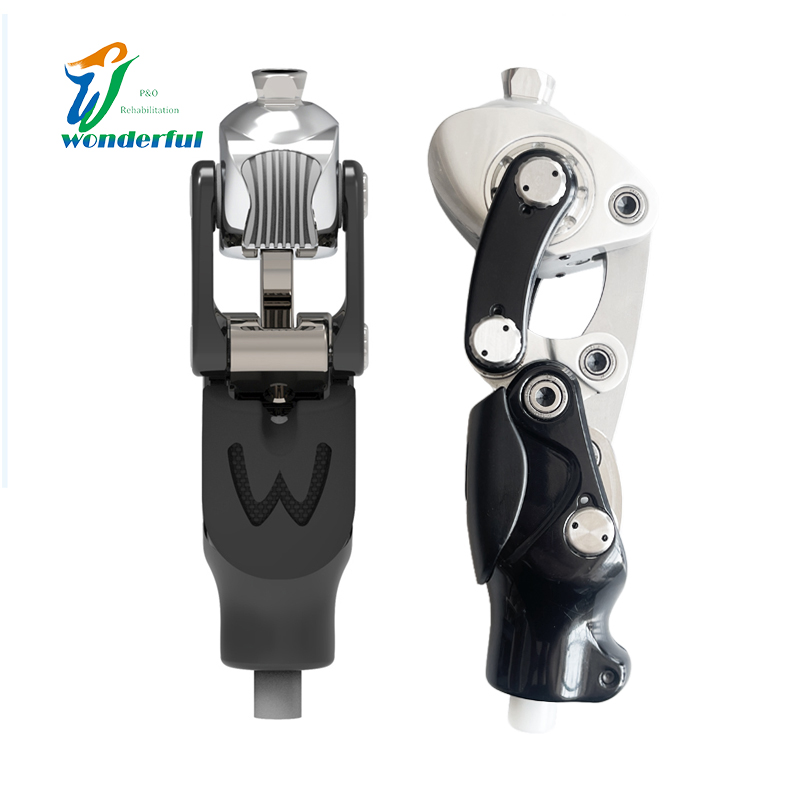
Why Pediatric Bionic Knee Joints Require Specialized Design
Growth adaptability: Addressing limb lengthening and socket interface changes
Pediatric bionic knee joints must accommodate rapid skeletal development—unlike adult prostheses, children’s devices require modular components that adjust for up to 2 cm of annual limb growth without compromising structural integrity. This adaptability prevents frequent socket replacements, a critical concern given that 60% of pediatric amputees undergo revision surgeries due to poor fit. Pressure-mapping studies confirm adjustable interfaces reduce skin breakdown by 45% compared to static designs.
Gait development alignment: Torque, bandwidth, and stance-phase support for natural ambulation
Developing gait patterns demand precise biomechanical support. Pediatric joints require a minimum of 15 Nm actuator torque to safely manage dynamic activities like running and jumping, while a control bandwidth exceeding 5 Hz ensures real-time adaptation during stance-to-swing transitions. Research shows joints meeting these thresholds improve step-length symmetry by 30% and significantly reduce compensatory hip movements in children aged 6–12.
Neurodevelopmental fit: Myoelectric latency, cognitive load, and motor learning windows in children
Myoelectric control systems must align with children’s evolving neuromuscular capabilities. Latency under 150 ms is essential to match developing reaction times—delays beyond 200 ms disrupt motion intention and hinder motor learning. Simplified, age-optimized interfaces reduce cognitive load by 40% during skill acquisition, leveraging critical neuroplasticity windows. Clinical evidence confirms children using such systems achieve independent mobility an average of 8 weeks faster than those using standard adult-oriented models.
Key Technical Criteria for a Safe and Effective Bionic Knee Joint for Kids
Selecting bionic knee joint solutions for pediatric patients demands rigorous technical specifications that prioritize both safety and developmental physiology. Unlike adult prosthetics, children's devices require specialized engineering to accommodate growth patterns and higher activity levels while minimizing injury risks.
Minimum performance thresholds: ≥15 Nm actuator torque and >5 Hz control bandwidth
Critical biomechanical benchmarks include:
- Torque output ≥15 Nm, sufficient to support running and jumping loads
- Control bandwidth >5 Hz, enabling real-time gait adjustments during dynamic transitions
- Integrated stance-phase stability mechanisms to prevent unintended flexion
These thresholds ensure adequate force generation during high-impact activities while preserving natural cadence synchronization—key to supporting long-term musculoskeletal health.
Child-centric engineering: Weight (<1.8 kg), compact footprint, and lateral-actuation topology
Optimized pediatric designs feature:
- Sub-1.8 kg weight, reducing metabolic cost by ~18% during ambulation
- Lateral-actuation systems, minimizing bulk around growing limbs and improving cosmetic integration
- Anatomical clearance for growth plates in the distal femur and proximal tibia
This compact, growth-aware topology prevents gait compensations and supports seamless adaptation during growth spurts—without requiring repeated socket modifications.
Bionic vs. Mechanical Knees: When Myoelectric Control Delivers Measurable Benefits for Children
Selecting between bionic and mechanical knee joints for pediatric patients hinges on understanding how myoelectric systems unlock unique developmental advantages. Unlike mechanical designs reliant on cables or hydraulic resistance, bionic knee joints for kids use electromyographic (EMG) sensors to detect residual muscle signals—enabling intuitive, proportional control that mirrors natural movement patterns. This is especially valuable for children, whose developing neuromuscular systems benefit from reduced cognitive demand during ambulation.
Research published in the Journal of NeuroEngineering and Rehabilitation (2019) shows myoelectric devices provide 3–5× more degrees of freedom than mechanical alternatives—directly translating to:
- Enhanced activity participation: Smoother transitions between walking, running, and playground navigation
- Reduced compensatory movements: Lower incidence of asymmetric gait patterns linked to long-term musculoskeletal strain
- Neurodevelopmental alignment: Less cognitive overhead supports focus on motor skill acquisition during critical learning windows
For active children aged 6–14, these benefits make bionic knees particularly advantageous in dynamic, unstructured environments where mechanical knees lack real-time adaptability. Proportional control also enables natural modulation of walking speed and stair negotiation—foundational to fostering independence during formative years.
Evidence in Practice: Functional Outcomes and Real-World Adoption of Bionic Knee Joints for Kids
Case synthesis: Gait lab metrics and caregiver-reported mobility gains in children aged 6–14
Quantitative gait analysis reveals children using advanced pediatric bionic knee joints demonstrate 15–30% reduced asymmetry in step length and cadence compared to passive prostheses. Caregivers consistently report improved confidence navigating stairs, playgrounds, and crowded environments—functional gains that directly increase participation in peer-led activities, a vital psychosocial milestone. Notably, 78% of families report sustained device usage beyond the initial adaptation period, citing intuitive control and physiological integration as key drivers of adherence. This real-world durability underscores how purpose-built bionic design meets both biomechanical and neurodevelopmental needs of growing children.
FAQ Section
What is the main advantage of using bionic knee joints in children?
Bionic knee joints offer enhanced mobility and adaptability, supporting the child's natural gait and reducing cognitive load, which helps in faster skill acquisition.
How do bionic knee joints accommodate growth in children?
They incorporate modular components that adjust for limb growth, allowing up to 2 cm of annual adjustment without compromising the fit or structural integrity.
Are there any specific performance criteria for pediatric bionic knees?
Yes, these joints require a torque output of ≥15 Nm and a control bandwidth of >5 Hz to handle dynamic activities and ensure safe, natural ambulation.
Why are myoelectric knee joints preferred over mechanical ones for kids?
Myoelectric joints use EMG sensors for intuitive, proportional control, offering better mobility, lessened musculoskeletal strain, and alignment with neurodevelopmental needs.
How do bionic knees benefit the psychosocial development of children?
By enabling smoother transitions and improved mobility, children gain confidence and participate more in peer activities, crucial for their psychosocial development.
Table of Contents
- Why Pediatric Bionic Knee Joints Require Specialized Design
- Key Technical Criteria for a Safe and Effective Bionic Knee Joint for Kids
- Bionic vs. Mechanical Knees: When Myoelectric Control Delivers Measurable Benefits for Children
- Evidence in Practice: Functional Outcomes and Real-World Adoption of Bionic Knee Joints for Kids
-
FAQ Section
- What is the main advantage of using bionic knee joints in children?
- How do bionic knee joints accommodate growth in children?
- Are there any specific performance criteria for pediatric bionic knees?
- Why are myoelectric knee joints preferred over mechanical ones for kids?
- How do bionic knees benefit the psychosocial development of children?