 EN
EN

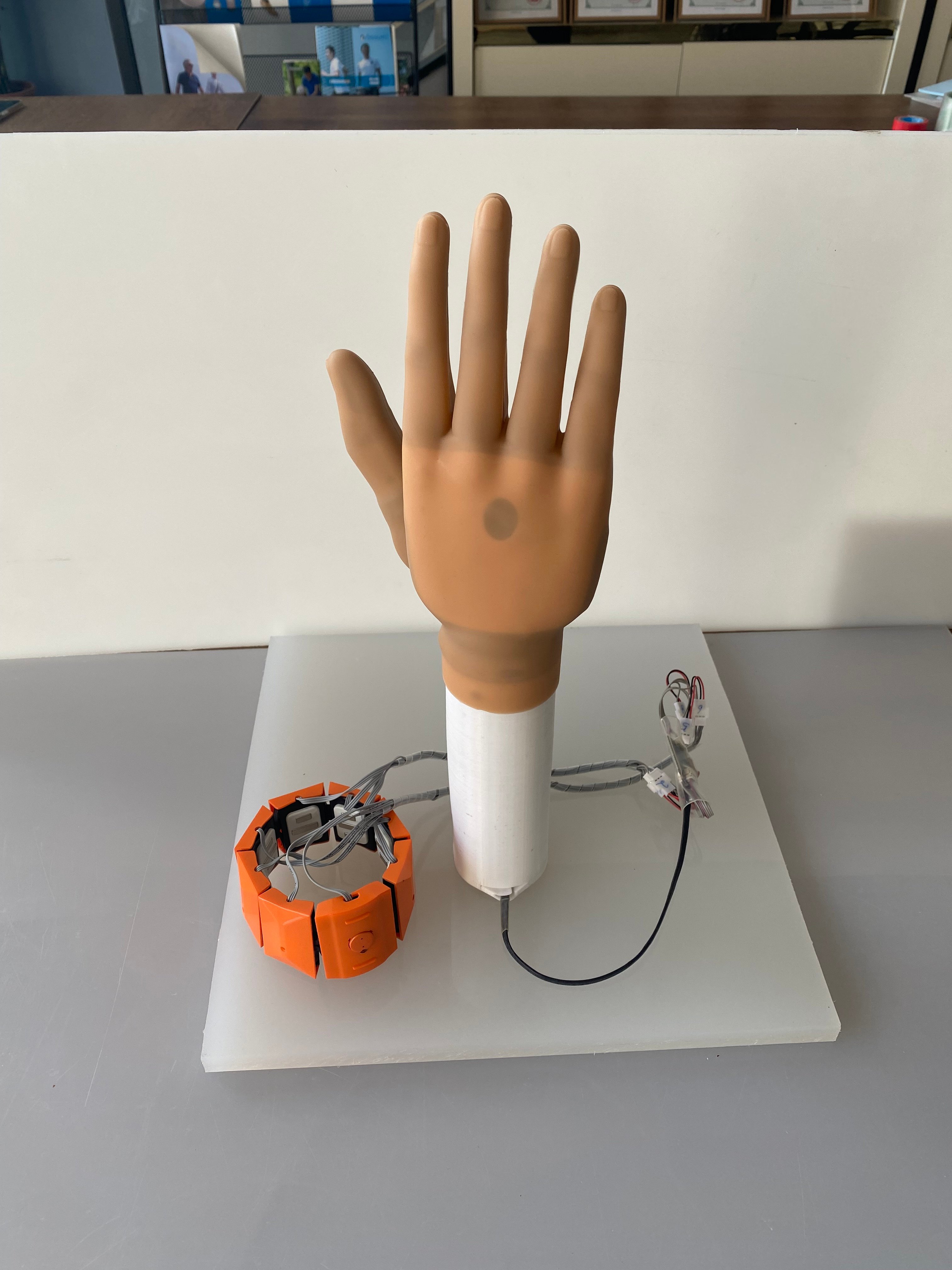
Myoelectric Control: Intuitive Operation for Modern Prosthetic Hand Users
How Myoelectric Signals Translate Muscle Intent into Natural Hand Motion
The muscles in a residual limb send out electrical signals called EMG when they contract. These signals can be picked up by electrodes built right into the prosthetic socket. Inside the device, there's a tiny computer chip that reads these signals and turns them into specific movements. Think about it this way: when someone activates their forearm extensors, the hand opens up, but if those flexor muscles kick in, the hand starts to grip whatever is in front of it. Newer systems are getting really good at reading even the smallest muscle twitches thanks to smart algorithms. This means people don't have to strain too hard for fine control anymore. Their gentle muscle contractions translate into softer movements, which makes handling delicate items much easier without needing constant concentration. According to some recent research from Robobionics back in 2024, these devices respond within about 200 milliseconds. That kind of speed lets users pick up eggs without breaking them or type on a keyboard almost as naturally as before losing their limb.
Myoelectric vs. Body-Powered vs. Cosmetic Prosthetic Hands: Functional Trade-offs
Different prosthetic types prioritize distinct user needs:
| Feature | Myoelectric | Body-Powered | Cosmetic |
|---|---|---|---|
| Control | Muscle-signal driven | Cable/harness mechanics | N/A |
| Functionality | Multi-grip adaptability | Basic pinching/lifting | Visual restoration only |
| Effort | Minimal (intuitive) | High (shoulder motion) | None |
| Maintenance | Electronics servicing | Mechanical adjustments | Cosmetic upkeep |
| Weight | Moderate (300–600g) | Light (200–400g) | Lightest (150–300g) |
Electric hand prostheses offer amazing fine motor skills and feel pretty natural when moving around, though they need frequent charging and sometimes tricky maintenance. The body-powered versions tend to last longer and are actually cheaper for people doing heavy physical work all day long. Cosmetic prosthetics help folks feel better about themselves socially without sacrificing any functionality really. Most doctors will tell patients to pick what fits their main needs best. Someone who wants to stay active probably goes for the responsive controls, workers handling tools daily might prefer something rugged and dependable, and those concerned about how they look in public often opt for realistic appearance that boosts their confidence during everyday interactions.
Grip Functionality and Dexterity: Matching Prosthetic Hand Capabilities to Real-World Tasks
Adaptive Grip Patterns for Daily Living–Validated by Clinical Task Performance
Modern prosthetic hands integrate multiple grip modes that mirror natural hand function, supporting independence across daily activities. Core patterns include:
- Tripod grips, optimized for precision tasks like holding utensils or writing
- Lateral grips, ideal for handling flat or thin objects such as credit cards or paper
- Power grips, designed for lifting heavier items like grocery bags
- Pinch grips, enabling delicate manipulation of small items like pills or keys
The effectiveness of these setups has been tested using standard clinical evaluations looking at everyday living activities (ADLs). People who try them out tend to finish tasks faster, particularly when they have access to devices with at least six different ways to hold things. More modern versions come equipped with sensors that can detect objects and then automatically change how tight or loose the grip needs to be. This kind of adjustment helps make what someone wants to do actually happen in real life, closing that space between thinking about something and making it work.
Individual Finger Control vs. Synergistic Grasping in Prosthetic Hand Design
Prosthetic hand designers balance dexterity against practical constraints:
| Design Approach | Advantages | Limitations |
|---|---|---|
| Individual Finger Control | Enables nuanced gestures–typing, playing instruments, fine tool use | Requires 19+ degrees of freedom (DOF), increasing weight, power demand, and complexity |
| Synergistic Grasping | Streamlined operation with lower weight, reduced maintenance, and faster learning curve | Less adaptable to irregularly shaped or unstable objects |
The human hand has around 23 degrees of freedom (DOF), giving it incredible flexibility and range of motion. But when it comes to actual prosthetic hands used in clinical settings, most only have less than 10 DOF. Why? Because having too many moving parts makes them heavier, harder to control, and drains batteries faster. That's why we see so many synergistic designs on the market today. These simplified systems can handle about 80 percent of everyday activities without causing excessive strain or discomfort. For people who lose their hand below the elbow (transradial amputees), this matters a lot. They already deal with issues like keeping the prosthetic securely attached, adjusting the socket throughout the day, and wearing it for extended periods without pain or irritation.
Ergonomic and Mechanical Design: Weight, Size, and Degrees of Freedom in Prosthetic Hand Selection
How Weight and Volume Impact User Comfort and Fatigue–Especially for Transradial Prosthetic Hand Users
The human hand has this amazing ability to move in 23 different ways at once, but most artificial hands can only control between 1 and 7 of those movements because of what engineers have to sacrifice when building them. What really makes these devices work well isn't just how many movements they can do though. People who lose their arms below the elbow often find heavy prosthetics uncomfortable. Anything over 500 grams starts to tire out the muscles in their remaining limb after wearing it all day. Lighter models around 370 grams make a big difference. Tests show people use 48% less energy doing everyday stuff like brushing their hair or writing notes. Size is important too. Big bulky cases get in the way of normal arm movement patterns. Slimmer designs help reduce unnecessary shoulder and elbow motions by about 31%, according to recent studies from last year. So when thinking about making better prosthetic hands, designers need to focus on three main things that all affect each other:
- DOF configuration, tuned to task-specific needs rather than theoretical maximums
- Mass distribution, engineered to minimize joint torque and socket pressure
- Anthropomorphic sizing, ensuring tissue-friendly contact without compromising mobility
For users relying on terminal devices for eight or more hours daily, these factors determine whether a prosthetic enhances autonomy–or intensifies physical burden.
Durability, Maintenance, and Long-Term Value of a Prosthetic Hand
How durable something is and whether it can be serviced really affects how long it stays useful and what people end up paying overall. Most artificial hands tend to last around 3 to 5 years when used normally, though they wear out faster if someone puts them through tough situations or doesn't take proper care. Regular upkeep matters a lot too. Cleaning the socket area, checking the joints regularly, and replacing batteries when needed helps avoid problems down the road. When people skip these basic steps, their prosthetics are more likely to break down mechanically, lose signal quality, or cause discomfort in the socket area, which makes the whole device less effective. A recent study published in Nature back in 2025 showed that nearly 4 out of 10 users stop using their prosthetics because they find them uncomfortable or don't work as well as expected. This highlights just how important good durability actually is in practice. Doctors suggest looking for prosthetic devices that have parts that can be replaced easily, access to repair services nearby, and proven track records for lasting performance. Weight plays a big role too. Anything heavier than 400 grams tends to tire users out quicker and puts extra strain on the joints and attachment points, which slowly weakens the entire system over months and years of use.
FAQ Section
What are myoelectric signals and how do they control prosthetic hands?
Myoelectric signals are electrical signals generated by muscles when they contract. In prosthetic hands, these signals are captured by electrodes and processed by a computer chip to translate muscle intent into specific hand movements.
How do myoelectric prosthetic hands differ from body-powered or cosmetic options?
Myoelectric prosthetic hands use muscle signals for control and allow multi-grip adaptability with minimal effort. Body-powered hands rely on cable mechanics and are suited for physically demanding tasks, while cosmetic prosthetics are focused on appearance.
What is the importance of grip functionality in prosthetic hands?
Grip functionality is crucial for enabling users to perform daily tasks efficiently. Adaptive grip modes allow prosthetic hands to mimic natural hand functions, supporting independence in various activities.
Why is weight important in prosthetic hand design?
Weight affects user comfort and fatigue. Lighter prosthetic hands reduce muscle strain and increase usability for extended periods. Slimmer designs also aid in natural movement patterns.