 EN
EN

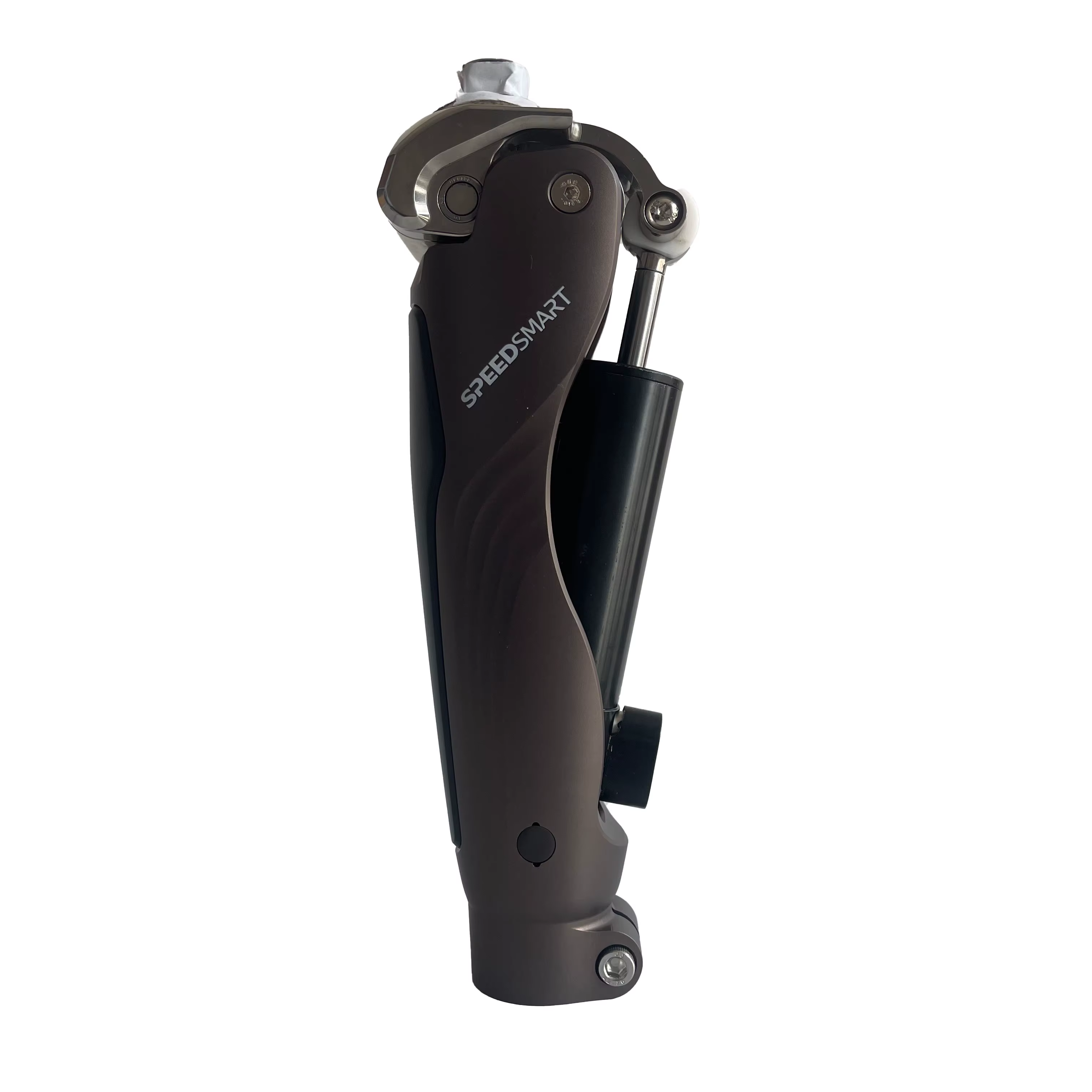
Human Gait Biomechanics Across Walking Speeds
Speed-dependent changes in gait phase timing and knee joint kinematics
When people walk faster, their entire movement pattern changes quite a bit. At those slower paces around 0.8 to 1.2 meters per second, most of the time is spent on the ground with only gentle bending of the knees when putting weight on them. Things start shifting when we reach what most would consider regular walking speed between 1.2 and 1.6 m/s. The time spent standing on each foot shrinks to about 60% of the whole cycle, and the knees bend much more during the swinging phase from roughly 45 degrees up to around 65 degrees. This helps clear the feet better and makes each step longer. Once speeds go beyond 1.6 m/s though, standing time falls under 55%, which means the body needs really good control over knee straightening at the end of the stance phase to push forward efficiently. All these adjustments show how our muscles and nerves work together to save energy while keeping us balanced no matter how fast we're moving.
Kinetic adaptations: Torque, stiffness, and power modulation at the knee
The knee modulates its mechanical output in a speed-sensitive manner to maintain locomotor efficiency:
- Torque profiles: Peak extension torque doubles—from 0.4 to 0.8 N·m/kg—between slow (1.0 m/s) and fast (1.8 m/s) walking, concentrated during weight acceptance and terminal stance
- Joint stiffness: Increases by 32% during mid-stance at higher speeds to reinforce limb stability against increased loading rates
- Power generation: Swing-phase knee power rises 150% from 1.0 to 1.8 m/s, accelerating limb advancement
Collectively, these kinetic adjustments minimize mechanical energy loss during step-to-step transitions. For every 0.1 m/s increase in speed, the knee contributes an additional ~8 J of net mechanical work to preserve consistent center-of-mass trajectory—a foundational benchmark for bionic knee design aiming to replicate biological gait fidelity.
Bionic Knee Joint Adaptation Mechanisms
Real-time speed estimation using IMU and ground reaction force sensing
Adaptive bionic knees today can figure out walking speed all the time thanks to something called sensor fusion. These devices use IMUs (inertial measurement units) to track how fast different body parts are moving and their position in space, sampling data every 1/100th of a second. At the same time, special sensors called force-sensitive resistors measure how hard the foot presses against the ground when standing. The smart software inside these prosthetics combines all this information to calculate walking speed within less than half a tenth of a second. That quick response lets the knee adjust its strength just in time for the next step forward. Because of this fast thinking ability, users don't notice any lag when switching between different walking speeds, and they stay stable on their feet throughout.
Phase-synchronized control: Stance stability vs. swing flexion assistance
The way control works gets divided according to different walking phases, following how biology actually functions. When someone is standing on their leg, the system ramps up resistance by around 35 percent when moving slowly thanks to these adjustable damping features, which helps keep things stable while bearing weight. For the swinging part of the movement though, the focus shifts towards getting the leg moving forward quickly. The microprocessors cut back resistance by about 28%, making flexion much more efficient. Real world testing has found that this two-part approach cuts down on energy expenditure by nearly 20% when switching between different speeds compared to older systems with constant resistance settings. Plus, it keeps knee movements pretty close to what we see in people without mobility issues, staying within about five degrees of normal range even when walking over rough ground or hills.
Clinical Validation of Adaptive Bionic Knee Joint Performance
Clinical testing shows that these smart bionic knees really do make a difference for people who need them. When we look at how well they perform, things like balance between steps, energy used while walking, and ability to handle obstacles all show better results in real life situations. For those missing part of their thigh, these adaptive systems cut down on energy usage by around 12 to 18 percent compared to regular prosthetics when going uphill or changing walking speeds. What matters most though is what actual users say. A big study from 2025 found that nearly nine out of ten participants felt much more confident walking around town after getting one of these advanced knees. They also seem safer too, with tests showing they help prevent falls when someone stumbles over something unexpected on the ground. All this research points to one thing: these speed adjusting systems represent a genuine breakthrough that helps people move more freely and stay stable where it counts.
Emerging Trends in Intelligent Bionic Knee Joint Control
EMG-driven intent recognition for anticipatory speed adaptation
The latest systems are now using surface EMG signals from what's left of the thigh muscles to actually guess when someone wants to change their walking speed before their body even starts moving differently. These machine learning programs look at those tiny muscle signals that fire in microseconds, checking both how strong they are and what frequencies they're working at, which helps figure out exactly what kind of force and resistance adjustments will be needed next. When this predictive control kicks in, it gets the knee bending about half a second to two seconds before the foot leaves the ground. That makes a real difference too - tests showed people walked with much less imbalance between legs when switching speeds, around 18% improvement over older systems that just reacted after things happened (according to Clinical Biomechanics research from last year). And all this happens because the system is adjusting things ahead of time instead of waiting for problems to show up first.
- Swing-phase power for enhanced ground clearance
- Stance-phase damping to stabilize deceleration
EMG-driven adaptation cuts metabolic cost by 12% during variable-speed walking and eliminates compensatory movements common with delayed-response prostheses.
Next-Generation Design: Variable-Impedance Actuation for Seamless Speed Scaling
Hybrid series-elastic actuator and magnetorheological damper integration
Modern bionic knee designs now mix series elastic actuators or SEAs with magnetorheological dampers called MRs to get that real time impedance modulation similar to how biological systems work. The SEA part actually captures and releases stored elastic energy throughout different stages of walking. Meanwhile, the MR damper changes resistance levels through electromagnetic controls that alter the viscosity of special fluids inside it. This allows for precise adjustments in stiffness and damping depending on how fast someone is moving. According to research published in the Journal of Bionic Engineering last year, this combination cuts down on energy usage by about 40 percent when transitioning between different walking speeds compared to traditional rigid actuation methods. Some of the main benefits these advanced prosthetics offer include:
- Dynamic impedance matching: Automatic alignment of joint mechanics with terrain and velocity demands
- Impact absorption: MR damping attenuates heel-strike shocks at faster speeds
- Energy recycling: SEA converts swing-phase momentum into assistive torque during stance
Variable-impedance control enables effortless scaling across 0.5–2.1 m/s—maintaining near-native kinematics without manual recalibration and closely emulating how biological muscle-tendon units modulate compliance in response to locomotor demand.
Frequently Asked Questions:
What is the primary benefit of speed-dependent changes in gait phase timing?
Speed-dependent changes enhance overall walking efficiency by optimizing knee joint kinematics, which reduces energy expenditure and aids in maintaining balance at various walking speeds.
How do modern bionic knees estimate walking speed?
Bionic knees utilize sensor fusion, combining data from IMUs and force-sensitive resistors to determine walking speed, adjusting in real-time to maintain stability and efficiency.
What advancements do hybrid series-elastic actuators and magnetorheological dampers bring to bionic knees?
These components allow precise real-time impedance modulation, improving dynamic impedance matching, impact absorption, and energy recycling, ultimately enhancing prosthetic efficiency and mimicking biological function.
Table of Contents
- Human Gait Biomechanics Across Walking Speeds
- Bionic Knee Joint Adaptation Mechanisms
- Clinical Validation of Adaptive Bionic Knee Joint Performance
- Emerging Trends in Intelligent Bionic Knee Joint Control
- Next-Generation Design: Variable-Impedance Actuation for Seamless Speed Scaling
- Frequently Asked Questions: