 EN
EN

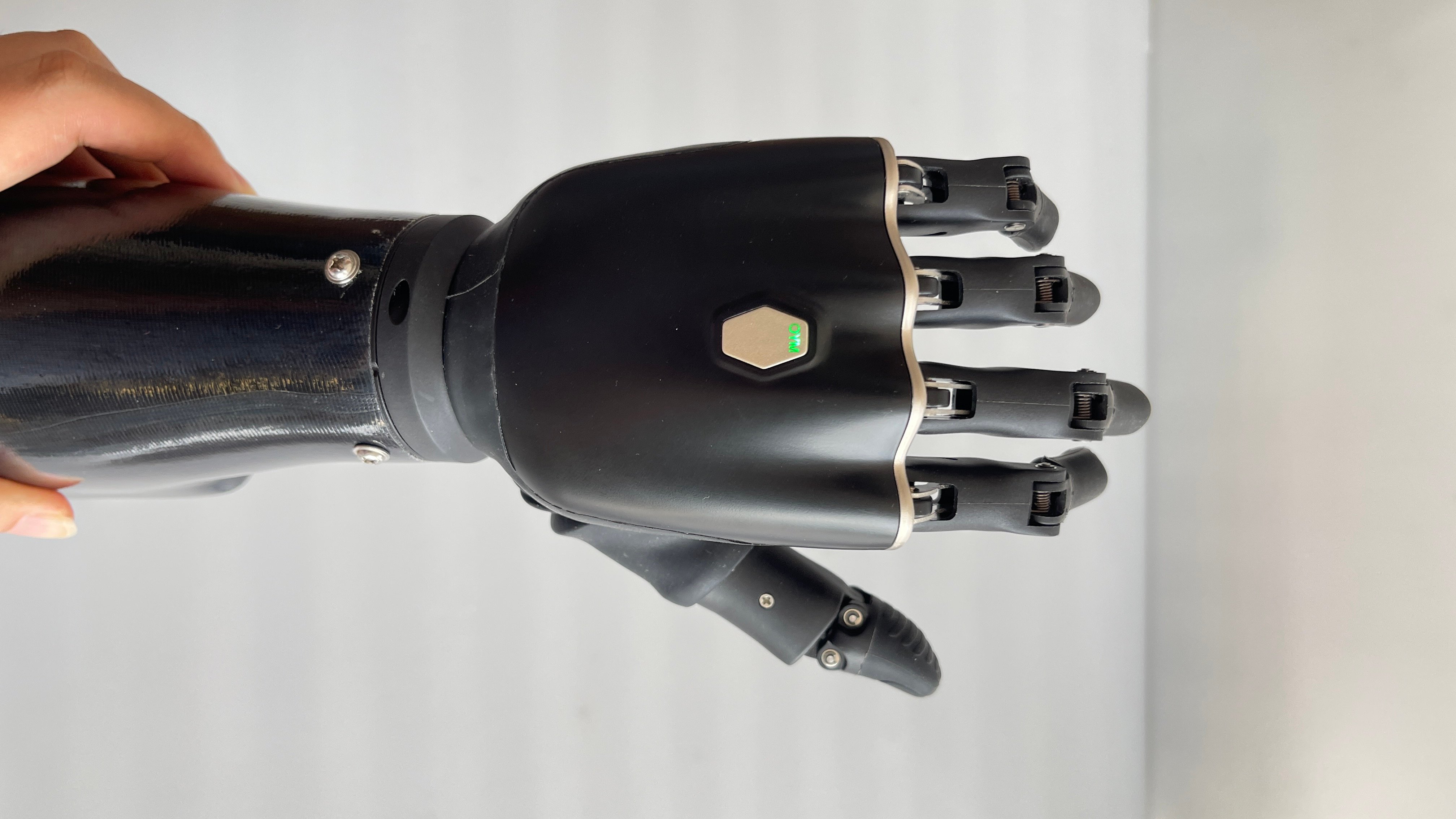
Foundations of Myoelectric Signal Control
How Muscle Activation Generates Reliable EMG Signals for Myoelectric Hand Operation
Muscles create electrical signals when they contract these are called electromyography or EMG signals and they show what's happening inside the muscle units. Electrodes placed on the remaining part of the limb pick up these bioelectric signals and turn them into instructions that control myoelectric prosthetic hands. The system needs to differentiate between different muscle actions like opening the hand versus closing it or varying levels of grip strength and convert those into clear, separate signals. High density EMG arrays have made things much better because they capture how muscles work together across different areas, making the whole thing less sensitive to where exactly the electrodes are placed. Studies from Nature in 2021 showed this approach cuts down placement error problems by around 64% compared to older methods with just two electrodes. People learning to use these systems typically start with simple exercises focusing on one muscle group at a time, such as flexing the biceps without letting the triceps jump in, so they can build up clear baseline signals that the device can recognize reliably.
Signal Conditioning, Threshold Calibration, and Individualized Electrode Placement
EMG signals straight from the body tend to be pretty weak and get messed up easily by all sorts of noise. Things like movement during testing, electromagnetic interference from nearby devices, and cross talk between different muscle groups can really mess with the data. That's why good signal processing is so important before anyone tries to interpret what's going on. We need to amplify these tiny signals, filter out everything outside our target frequency range (usually around 20 to 450 Hz), and convert them into digital form for analysis. When prosthetists work with patients, they spend time adjusting how sensitive the system needs to be based on each person's specific signal strength. This helps avoid those frustrating moments where the device activates when it shouldn't or misses commands altogether. Getting the electrodes placed just right makes a huge difference too. The best spots are usually over the motor points in muscles where the signal is strongest. Finding these areas not only makes the device respond better but also cuts down on how long we spend calibrating everything. Studies have shown that when clinicians follow personalized calibration procedures that have been tested in real clinics, people complete their daily tasks successfully about 41% more often because there's less guesswork involved in translating muscle activity into actual movements according to research published in Frontiers in Neurorobotics back in 2016. Here are some key steps to remember:
- Baseline Testing: Quantifying resting EMG and voluntary maximal contraction (MVC) voltages
- Dynamic Mapping: Adjusting thresholds during functional movements to account for fatigue and variability
- Spatial Optimization: Using temporary electrode grids to identify motor point locations before permanent placement
Conventional vs. High-Density EMG Systems
| Feature | Conventional EMG | HD-EMG |
|---|---|---|
| Electrodes | 2–8 discrete | 64+ array |
| Placement Sensitivity | High (critical positioning) | Low (translational invariance) |
| Signal Accuracy | 72–79% | 89–94% |
| User Calibration Time | 45–60 minutes | 15–25 minutes |
Data sourced from Nature (2021) and Frontiers in Neurorobotics (2016)
Progressive Skill Acquisition for Functional Myoelectric Hand Use
From Isolated Contractions to Coordinated Bimanual Tasks: A 6-Week Evidence-Based Protocol
Functional mastery follows a neuroplasticity-informed, phased progression—clinically validated to accelerate integration and reduce device abandonment. This 6-week protocol aligns with motor learning principles, emphasizing deliberate, context-rich practice over passive exposure:
-
Weeks 1–2: Foundational Signal Control
Users develop isolated, reproducible contractions using mirror-guided visual feedback. Focus remains on single-axis motions (open/close) to solidify neuromuscular coupling and build confidence in signal generation. -
Weeks 3–4: Grip Differentiation & Object Interaction
Training introduces pattern-based control—precision pinch, lateral key, and power grasp—during unimanual manipulation. Objects progress from rigid (cups, blocks) to compliant (stress balls, sponges), challenging proprioceptive integration and force modulation. -
During weeks five and six, therapy focuses on contextual bimanual integration. Patients work on tasks that require both hands working together for everyday activities. Think stirring soup while keeping the bowl steady, twisting jar lids open, using eating utensils properly, or dealing with tricky zippers. The rehab team sets up realistic scenarios in spaces that look like actual homes or workplaces, which helps patients apply their skills outside clinical walls. Toward the end of this phase, therapists throw in challenges like rushing against the clock or handling delicate items that might break if mishandled. These added pressures prepare individuals for the unpredictable nature of real life situations where timing matters and objects aren't always forgiving.
Consistency—not duration—drives outcomes: ±30 minutes/day of focused practice yields 40% faster functional integration than unstructured training (Journal of NeuroEngineering and Rehabilitation, 2022). Automaticity emerges as conscious effort gives way to intuitive control.
The Critical Role of Occupational Therapy in Myoelectric Hand Training
Person-Centered Goal Setting and Contextualized Practice in Upper Limb Prosthetic Rehabilitation
Occupational therapy plays a key role when someone adopts a myoelectric hand, helping turn cutting edge tech into real life abilities that matter. Generic tech training just teaches how things work, but OT focuses on what matters most to each person. Therapists sit down with individuals and figure out their specific goals cooking for family, getting back into carpentry work, or simply being able to hold a grandchild. Then they create customized plans to help reach those targets. Studies show people who go through this kind of rehab are around 70 percent more independent in daily tasks than those who only get basic device training according to research published in the Journal of Rehabilitation Research and Development last year.
When people learn new skills in real world settings, those abilities tend to stick better. Therapists create mock situations like kitchen environments, workshop spaces, or classroom setups where patients work on controlling their muscles through meaningful tasks that matter to them emotionally. For instance, parents might spend time practicing how to hold bottles using different levels of grip strength, while graphic designers get hands-on experience manipulating styluses just like they would at work. The connection made between muscle movements and actual results speeds up how quickly the brain adapts to these changes. Over time, this kind of targeted practice helps build stronger memory patterns for motor skills, making it easier for individuals to perform daily activities independently.
Core OT strategies include:
- Activity analysis: Deconstructing complex tasks into sequential myoelectric actions
- Environmental adaptation: Reducing extraneous cognitive load through workspace modifications
- Error management: Teaching anticipatory strategies—like pre-grasp stabilization or signal reset techniques—to recover gracefully from mis-grasps or signal drift
Without this therapeutic scaffolding, even high-fidelity devices risk disuse. OT ensures the myoelectric hand becomes an intuitive extension of volition—not a technological artifact requiring constant troubleshooting.
Optimizing Prosthetic Technology Through Training-Aligned Programming
Bridging the Gap: Aligning Myoelectric Hand Componentry, Firmware Settings, and User Skill Development
Optimal performance arises not from maximizing hardware specs, but from synchronizing technology with the user’s evolving neuromuscular capacity. Prosthetists must select electrodes, processors, and firmware parameters—not based solely on technical benchmarks—but in direct response to the patient’s current control proficiency and training phase.
New users tend to do better with more cautious settings initially. We usually set higher activation levels, slow down the grip speed, and keep pattern recognition simple so people don't get frustrated and actually experience some successes early on. When someone progresses through their occupational therapy sessions starting with basic muscle contractions and moving toward using both hands together, it's time to gradually adjust those settings. Lower the activation threshold so they can control smaller forces, allow switching between different grips, and fine tune how sensitive the device is to slight changes in signals. Getting too complicated too fast often leads to unwanted activations that frustrate the user. On the flip side, waiting too long to make these adjustments can prevent real progress in daily functioning.
Research shows that programming aligned to skill progression reduces long-term device abandonment by 37% (American Journal of Occupational Therapy, 2023). This dynamic calibration transforms the prosthesis from a static tool into an adaptive partner—responding to, and supporting, the user’s neurological growth at every stage.
FAQ
What are EMG signals?
EMG signals, or electromyography signals, are electrical signals generated by muscle contractions. They are used to control myoelectric prosthetic devices by translating muscle activity into movements.
How do high-density EMG systems compare to conventional ones?
High-density EMG systems use more electrodes (64+), offer translational invariance, and provide higher signal accuracy (89-94%) compared to conventional systems that use fewer electrodes and have more critical positioning requirements.
What role does occupational therapy play in myoelectric hand training?
Occupational therapy focuses on personalizing training to meet individual goals, ensuring practical and meaningful skills development. It involves creating real-world scenarios to help patients adapt and integrate these skills into their daily lives.
Why is signal conditioning important in EMG systems?
Signal conditioning amplifies weak EMG signals, filters out noise, and converts them into a digital format for analysis. It is crucial for accurate interpretation and response of prosthetic devices to user commands.